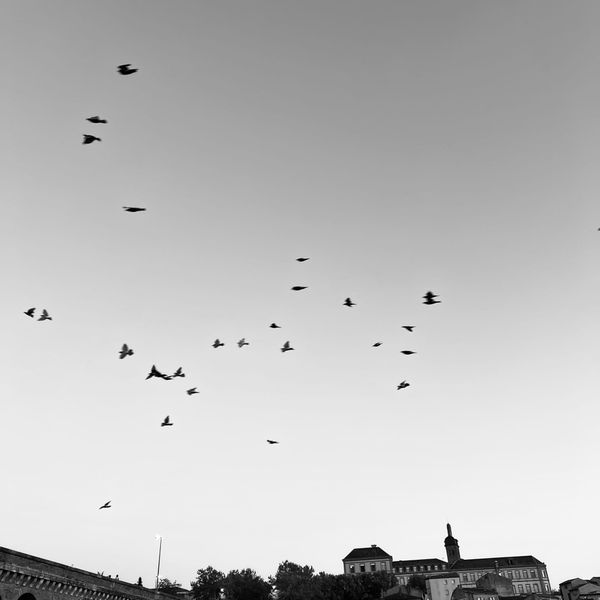
Score: Weather in the Orchard
Most of us hope for harmonious relationships.
We celebrate the easy conversations, the shared laughter, the sense that we understand one another. Researchers have even suggested that flourishing relationships tend to have many more positive interactions than negative ones.
At first glance, it sounds like a simple equation: the more pleasant exchanges, the healthier the relationship.
But I have begun to wonder whether that is the whole story.
Perhaps the difficult conversations are doing something that the pleasant ones cannot.
Not because conflict is inherently good. It isn’t. Most of us would gladly choose kindness over argument.
Yet every so often reality places a burden on a relationship.
A misunderstanding.
An illness.
Retirement.
A disagreement over money.
A changing season of life.
Something arrives that asks a quiet question:
What can this relationship actually carry?
A pleasant afternoon together cannot answer that question.
Only the burden can.
The difficult conversation, then, is not simply damage to be repaired. It is also a form of measurement. It reveals the present carrying capacity of the relationship. Sometimes we discover that it is stronger than we imagined. Sometimes we discover that what worked ten years ago no longer fits today.
Neither discovery is a failure.
Both are reality speaking.
The purpose of affection is not to eliminate these moments.
Perhaps it is to create enough trust that reality can enter the relationship without destroying it.
That changes how I think about growth.
We often imagine maturity as avoiding disruption.
An orchard suggests something different.
An orchard expects weather.
Branches bend.
Leaves fall.
Dead wood is pruned.
Unexpected fruit ripens.
The health of the orchard is not measured by the absence of storms, but by what remains capable of growing after they pass.
Relationships may be much the same.
This has slowly changed the way I think about participation.
I no longer ask only, What happened?
I ask, What has changed?
What can we now carry together that we could not carry before?
What burden has become too heavy?
What possibility has quietly appeared?
This is what I have begun to think of as event literacy—not simply understanding events, but learning to recognize how they alter the possibilities for future participation.
No framework can answer that question in advance.
Every real moment still asks something of us.
Every friendship.
Every marriage.
Every workplace.
Every family.
Eventually we arrive at a place where no principle, however wise, can make the decision for us.
Only attention.
Only conscience.
Only the quiet work of responding faithfully to the reality that has actually appeared.
Perhaps that is why essays continue to matter.
They do not remove responsibility.
They accompany it.
They offer another way of seeing, trusting that capable and responsible readers will complete the final step for themselves.
The score, then, is surprisingly simple.
When the weather comes, don’t ask first whether the relationship has failed.
Ask instead:
What is this moment teaching us about what we can now faithfully carry together?